Sunday, May 28, 2023

“As you suspected, it really is about race”

May 28, 2023 “As you suspected, it really is about race”     

Dr. Roger Ray      click here to see the video


By Kristen Holmes and Jon Passantino, CNN

Updated 5:47 PM EDT, Wed May 3, 2023


In a newly revealed text message, ousted Fox News host Tucker Carlson made a racist comment and said he found himself briefly rooting for a mob of Trump supporters to kill a person.

“A couple of weeks ago, I was watching video of people fighting on the street in Washington,” Carlson texted a producer. “A group of Trump guys surrounded an Antifa kid and started pounding the living s**t out of him. It was three against one, at least. Jumping a guy like that is dishonorable obviously. It’s not how white men fight. Yet suddenly I found myself rooting for the mob against the man, hoping they’d hit him harder, kill him. I really wanted them to hurt the kid. I could taste it.”

Carlson sent the text message to one of his producers in the hours after the violent January 6, 2021, insurrection on Capitol Hill. 

A posteriori - definition and meaning - Market Business News

A few weeks ago, I dusted off my 1970’s philosophy degree and talked with you about how we know what we know. There is “a priori” knowledge that we just inherently know or that we receive as a revealed truth from a holy book or a religion, and there is “a posteriori” knowledge that we derive from our own experience.


Most of us who grew up in a faith community were expected to believe a whole lot of things based on what was mistakenly called “faith,” sort of an invitation to assassinate your brains and just believe a whole lot of things because you were told to by your church or because it was in the Bible and it was almost a test of character to be able to believe these things without questioning them. 


I believe that is precisely where traditional religions and progressive faith communities part company. Progressives are invited to question everything. As Scot Peck once said, “Anything that cannot be questioned is an idol and all idols are slated for destruction.” Now, people will reach different conclusions, of course, but if you are not allowed to even ask, not only “Was Jesus really God’s only son?” or “Did Jesus really rise from the dead?”, but more fundamentally, “Was there really a historical Jesus or is the whole gospel tradition a fiction?” . . . if you cannot ask the hard questions then, at least for me and most progressives, your religion is based on nostalgia and wishful thinking. 

I have often talked with you about “evidence based faith,” that is, rejecting any belief that is merely handed down to us as an assumed part of our religion and to try to create a faith that is rooted in what can be known, based on testable evidence. This is a hard pill to swallow for a lot of religious people but if what you believe is based only on how you feel, if you believe things that cannot be critically examined, then, again, at least for me, that’s not faith, that’s superstition and I don’t want to base my life, heck, I don’t even want to waste my time listening to  your superstitious beliefs. 


I believe that religious faith is in need of critical thinking skills and if you ever go down that path, you will find yourself demanding critical thinking in all of the other arenas of your life. . . especially in politics. Public debate is often based on little more than who has the largest megaphone. 


Donald Trump keeps finding opportunities to say on TV that the January 6th rioters came to the Capitol with “love in their hearts” and that it was a “beautiful day.” 

Fact check roundup: False narratives linger two years after Jan. 6Which takes us back to the famous Chico Marx quote, “Who are you going to believe, me or your lying eyes?” I sat and watched live coverage of the January 6th insurrection on TV for hours, as did millions of other Americans and people around the globe. What would it take to make you believe that it was a beautiful day and that the thousands of protestors all had love in their hearts as the fought with the police and spread their feces around the Capitol Building? 


I suppose that in a technical sense, propaganda might be either true or false. But we typically use that word to describe attempts at persuading people, through repetition and intimidation, to believe things that are clearly not true. Why does anyone believe in heaven or hell, souls, angels, demons, or ghosts? We have no evidence for any of it and yet through repetition and coercion, most of us have been intimidated and indoctrinated by the church, the clergy, our parents, our peers, and culture itself, to believe in absurd and fantastic things that then govern our lives. 


I don’t believe in life after death because there is not a shred of evidence of any reliable source to even suggest that there is consciousness apart from a brain, or a soul beyond a living body. Wanting to believe it isn’t evidence. Millions of people at least acting like they believe it isn’t evidence, in the same way that Donald Trump insisting that the crowd at his inauguration was the largest ever, doesn’t make it so. 

Trump Inauguration: Crowd Smaller Than Obama's | TimeYou can just look at a picture of Obama’s first inauguration beside a picture of Trump’s inauguration crowd and clearly see that Trump had less than half the crowd of other recent inaugurations…. But who are you going to believe, Trump, or your own lying eyes?


One of the really dangerous problems with our current media footprint, is that misinformation can be repeated so often that people will actually believe the lies rather than their own eyes. And, of course, Fox News is always the primary example, but they are not alone. But one of the insidious things about Fox News propaganda is that it is so often delivered in tones of horrible condescension. They use words like “elitist,” which often is just a euphemism for people who are educated and informed, or “woke” or “snowflake” as a description of people who actually have compassion for others, but they say it in a way as if having sincere compassion for the plight of immigrants, or the poor, or racial minorities, is some kind of disease. And the term “antifa” is used to describe protestors as being un-American when “antifa” literally means “anti-fascist.” Folks, have we forgotten that WW II was a war against fascism? My very conservative father, a WWII veteran, was certainly antifa. Who wants to be pro-fascist?

DeSantis: 'Florida Is Where Woke Goes to Die' - YouTube

Florida’s governor, Ron DeSantis, who often talks like a man who has been bitten by a rabies infected bat, brags that “Florida is where woke goes to die.” This is his slogan to promote his culture war fight to defend white supremacy and to promote book banning, trans-phobia, immigrant bashing, and a generally sad elevation of prejudice and ignorance to a nearly sacramental status. 

PhotoI love that the British comedian, John Cleese, said about the term “snowflake,” “Yes, I’ve heard this word. I think sociopaths use it in an attempt to discredit the notion of empathy.” And I think that is both accurate and fairly obvious. 


I Am Awake | BeyoutifullivingBut more seriously, there is a story from Buddhist tradition that says that after the enlightenment, a man noticed the radiance of the Buddha and he asked him, “Are you a god or a celestial being,” and the Buddha replied, “No.” And the man asked again, “are you a mortal?” And Buddha replied, “No.” So finally the man asks, “Then what are you?” And the Buddha answered, “I am awake.” 


So, if the Buddha described himself as being a woke snowflake, how much of an insult can it be for us to be the same thing? And yet, these terms are being used as a dismissive insult in order to defend prejudice against being challenged. 


Through these past years as Fox News host, Tucker Carlson, has ranted against any teaching of actual American History being taught in public schools, calling any mention of slavery, Jim Crow laws, segregation of schools, or discrimination in hiring as being CRT, Critical Race Theory. And he has described the 1619 project as being an inaccurate description of racism in America, used only to make white children feel guilty and to doubt themselves. But all of this has been portrayed as being matters of opinion. 


We are not supposed to call Trump or Trump supporters racists. We are not supposed to call out Tucker Carlson or Ron DeSantis as trying to hide and deny America’s institutional racism. But the reason I am bringing all of this up today is because of the recent release of some of Tucker Carlson’s internal Fox texts and emails in which he reveals in stark terms just how horribly racist that he undeniably is. 


While Carlson disparaged three Trump supporters for ganging up on one black protestor, it wasn’t because the violent confrontation was wrong, it was, he said, “not how white people fight.” He confessed that he still wished that they had killed the black antifa protestor. It isn’t that he is against lynching or racially provoked murder, he just wants it to be done with better style. 


Yes, we are all sick of the partisan division in our government that has increasingly become a kind of cold civil war, dividing our entire nation against itself. I hear of many people saying that they just don’t watch the news anymore, that they refuse to pay attention to politics, as if maintaining neutrality is somehow a virtue. I want to see our country reunited. I want to see Democrats and Republicans cooperating, compromising, and providing meaningful leadership to our country. But we don’t get there by pretending that prejudice either doesn’t exist or doesn’t matter.

The Latin phrase, “E Pluribus Unum” was officially adopted by an act of congress shortly after we had won our independence as the motto of the United States. Out of the many, one. Unity was the guiding principle, even if none of them were yet fully willing to embrace it. 

E Pluribus Unum was our motto even when slavery was still common, and women not only couldn’t vote but they also lacked most of the civil rights of white men. But unity was the goal, unlike many other modern countries that still defend their borders and their culture against diversity, we refused to have a state sponsored religion, we fought a bloody civil war to abolish slavery, and many of us lived through the violent and turbulent years as we dismantled America’s apartheid system of segregation. 


The one thing that I believe that Tucker Carlson’s private text messages demonstrates to us, what it is undeniable evidence for is the fact that we really need to teach the painful truths about America’s history of racism and misogyny. All of this book banning is an attempt to erase America’s history of racism, it is an attempt at delegitimizing what it means to be gay or transgender in our diverse culture. The partisan gerrymandering of voting districts in southern states is a defacto attempt at making black voters powerless . . . if they can’t keep black people from voting, then they will try to make their votes ineffective. 


America’s greatness is rooted in its diversity, out of the union we build from people of different races, religions, cultures, sexual orientations, and languages. We are a nation of immigrants that now is being taught to fear and despise immigration, how crazy is that? 

Transgender rights: MPs demand end to institutional transphobia | The  Independent | The IndependentLook, if being around trans people makes you uncomfortable, maybe even afraid or maybe disgusted, hear me out, I understand. This has not been an easy issue for me. But I can remember when being around openly gay people made me uncomfortable. 

Can you straight people remember how you used to feel about gay people? Can you remember what made the difference for you? Do you remember how you got past that prejudice? Right now, here in the state of Missouri, as is happening in Florida and Arkansas and many other states, people who are uncomfortable with trans people are writing legislation to ban trans athletes from competition, passing laws to threaten doctors with loss of their medical license or even with prison time for administering gender affirming medications or surgery. 


But do you remember how you managed to escape your prejudice against gay people? It wasn’t by trying to legislate them out of existence or to force them back into the closet, it was by getting to know gay people better. It was by discovering that someone in your family, in your circle of friends, had been gay all along. My own liberation from my cultural prejudice against gay people started to happen when two women that I cared about as friends made it obvious that they were falling in love with one another. Thankfully, rather than condemning them for their love, I had to root out some hatred hiding in me. 


The first few years of my public school education took place in a rural segregated school system in Kentucky and I was just ten years old when schools were integrated and it wasn’t an especially smooth transition but it got easier as our little league baseball team became integrated, and then the municipal swimming pool. And in college I lived in an integrated neighborhood, and later I dated interracially and then adopted interracially. Every part of that journey had some challenges to it but every step of the way was a step towards liberation, a movement towards unity and now I can proudly say that I am woke as F.                                                                                                                                                                                                                                                                        

Now, I know that I need to bring this sermon home before I run out of either time or your patience, if I have not done so already. I went to seminary at Vanderbilt in 1979 with a brand new degree in philosophy and 23 years of experience in traditional Christianity. When I started seminary, I confidently believed that Christianity was the only true religion. I believed that the Bible was the word of God. I believed that Jesus was the only source of salvation and heaven and hell were as real in my mind as Canada and Mexico. 


Four years later, I knew that none of those things were true, but I was in a job where for the next 25 years I had to conform to a culture that still basically believed in all of those things. My career as a Christian pastor came to an end when I started to talk a little too much about evidence based faith. I came out of the closet of traditional faith when the closet got too small for me to continue to live in it anymore. But I lived in that closet for 20 years after I knew that I didn’t really belong there anymore. 


Folks, Tucker Carlson graduated with a degree in history from Trinity College. Ron DeSantis graduated from Yale and then graduated from Harvard Law School. 

Ted Cruz, the anti-immigrant, racist senator from Texas, whose real name is Rafael Cruz . . . I don’t know how you get Ted out of Rafael, but Senator Cruz was born in Canada and later graduated from Yale and then Harvard Law School. Greg Abbot, the governor of Texas was at Vanderbilt at the same time that I was. He was in the law school while I was next door in the Divinity School where we shared a lunch room that was called a refectory because, after all, it was Vanderbilt. 


All of these public racists are living in a closet that they know that they don’t belong in. They may have gone to Trinity, or Yale, or Harvard with those prejudices but if they read enough of their assignments to pass the exams and graduate, then I can assure you that they know that their public dismissal of snowflakes, their curled lips when they talk about being woke, and their shameless attacks on trans kids and poor immigrants is all an act they are putting on to manipulate voters who never had a chance to go to Trinity, or Yale, or Vanderbilt, or Harvard. 


I went to Vanderbilt where most of my professors were Yale grads, and I was later a fellow at Harvard. I am not telling you what I believe to be true, I am telling you what I know from experience, from evidence, is true. We don’t need to unite with them in a way that would imply that their anti-woke rhetoric is a legitimate difference of opinion. It is a manipulative, dishonest, act that is destroying this country and we don’t need to tolerate it for another minute.


Both honesty and patriotism demands that we begin to love our nation enough to demand that we live up to our original vision embodied in the motto, e pluribus unum.      The trans kid who makes my coffee at Starbucks is a part of this nation and she is a part of me, just like the undocumented farm worker who picks Rafael Cruz’s apples and oranges are a part of him. 


And remember, before Tucker Carlson got fired at Fox, he was fired by MSNBC and CNN. It is time for this nation’s politicians and talking heads to come out of the closet.


When, in the 10th chapter of Luke, Jesus was asked, “Who is my neighbor?” Jesus answers by telling the story of the good Samaritan . . . he tells a story about a Jew who was saved by a man who that Jew had grown up believing was his enemy.

Meet the 11-year old with a higher IQ than Albert Einstein and Stephen  Hawking - YouTubeJust to suggest a conversation starter at your next family Thanksgiving dinner, may I suggest just mentioning that person with the highest known IQ in the world is an 11-year-old British kid, Yusuf Shah. His performance beats those of physicists Stephen Hawking and Albert Einstein. Even though he is of a race and heritage that most of these right wing racists would not have allowed to immigrate into the United States. More than that, how many kids with as much or more intelligence than Yusuf Shah were detained in cages at our border or left to grow up without education harvesting peaches and broccoli in farm worker camps in California or the Carolinas? It’s just something to think about.


Just as Christianity may begin to regain some of its lost credibility when they remember that Jesus taught us to love our enemies, to literally turn our enemies into our neighbors, so America will become great again when they remember that our diversity is our greatest source of genius, creativity, liberty, and justice for all when we are able to look at our own history of racism and prejudice and decide to get to know the immigrant at the border better, to enter conversation with trans people until we can let go of our fear and turn our disgust into friendship. 


It isn’t easy and it usually isn’t done quickly, but we have done it before and we can do it again. That’s not just my opinion, this time, you know that I am right.                                                                                                                                                                                                                                                                                   A blue and white sign with black text

Description automatically generated with low confidence


Sunday, May 21, 2023

Permaculture and Spiritual Practice

“Abundance, Regeneration, and Healing”: Permaculture and Spiritual Practice

David Ketchum
May 21, 2023

Watch the video HERE.

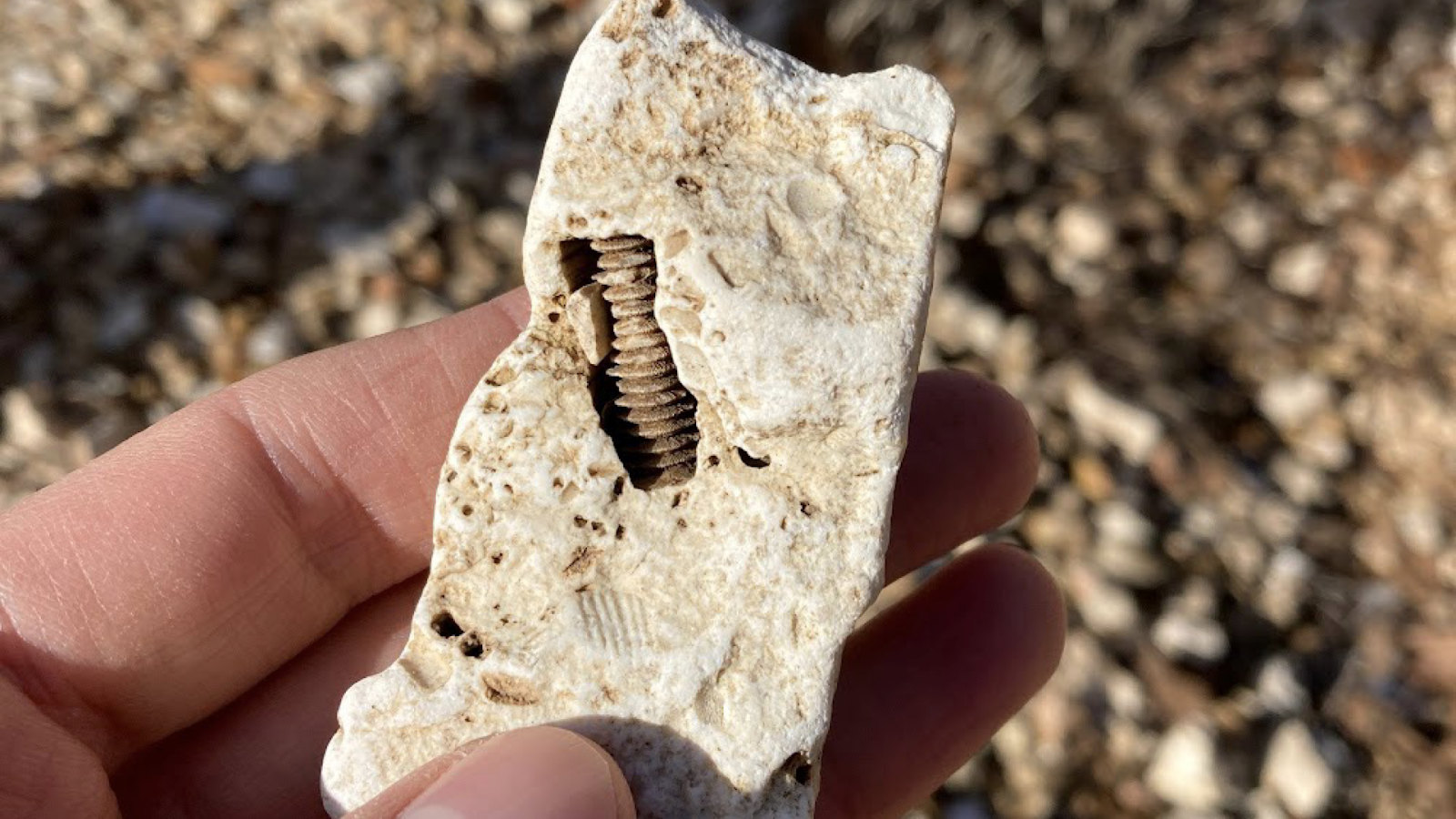
I love walking in the Ozarks, and there is a special place in my heart for glades and hillsides with limestone outcrops. Even after all these decades,  every single time I stop to take one of countless photos, or sit and read a book, I pause in wonder that I am on the floor of what used to be an inland sea, the result of millions of years of marine animals living and dying in a shallow sea. (In fact, this sea has been compared to what the Bahamas are like today. So we are, in fact, living in what was something like that paradise; we are just living here 325 million or so years too late!) The memory of this paradise is in the rocks themselves,  most readily seen in crinoid fossils. Its stalked form, known as a sea lily, made a tubular calcite shell. When the crinoid died, its shell was added to layers and layers of other shells, comprising much of the limestone we see today. And when the sea receded, more layers of shale, limestone, and sandstone were left behind. 


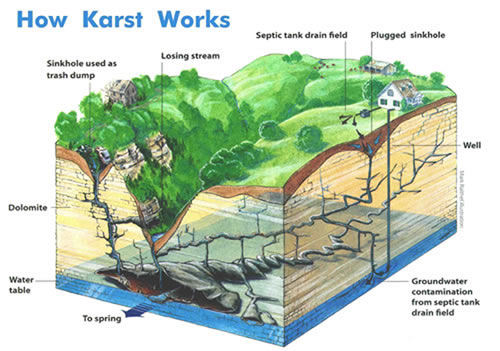
This same ancient history is also responsible for so much that I love here, from losing streams, shut-in swimming holes, springs, caves, sinkholes, karst windows, and more. Growing up, I floated, swam, waded, and, when the beds ran dry, collected fossils in the many losing streams and creeks that ran across the countryside. I learned only later that the water was still there, just running out of sight in the bedrock aquifers beneath our feet. And I’ll never forget caving, especially with my friend Aubra. We didn’t need anything spectacular; we just enjoyed the profound solitude that being underground offered. (Although, we did have our share of misadventures. I remember one time, after we had been wriggling for about fifteen minutes through a bit of a squeeze, when Aubra suddenly stopped and shuddered. In the light of my head lamp, all I could see was her feet, which, to my surprise, started to move backwards towards me. They were moving much more quickly than I expected, given we were in a tight passage and moving backwards was not exactly easy. I didn’t have time to figure it out; I started wriggling backwards, too. We made it out in what I would assume is still a record time, at which point I learned that Aubra had inadvertently discovered a thriving community of beetles in the passage ceiling, which had started cascading into her hair.) 

All of this natural wonder, and the fun that went with it, owes itself to the dissolvability of limestone, made up of calcite, in a weak acid. The Ozarks’ soil happens to be made up of layers and layers of rotting organic matter, such as leaves and pine needles. Rotting organic matter produces carbonic acid, which is dissolved and absorbed by rainwater as it soaks and drains through the soil. When this acidic water meets limestone, it slowly dissolves the calcite.  Over millions of years, water carved out the karsts and caves, and coursed beneath our feet as underground rivers in a living process that continues today. 


But a karst topography is also especially sensitive to groundwater pollution, for the simple fact that there is less sediment to act as a filter. Contaminated surface water can very quickly become contaminated groundwater. And the pollution can spread quickly, at the speed of an underground river. So what happens when we don’t pay attention to this fact? Or worse, what happens when we don’t care? I grew up hearing stories of people using sinkholes as private landfills, and of folks thinking it was okay to dump used motor oil into street drains, without any consideration that these contaminants would go straight into our groundwater systems. 

        But as bad as those abuses were, they have been outdone by local industries. One of these terrible lessons in human hubris came courtesy of Litton Systems, near the Springfield-Branson airport. Beginning in the 1960s, they manufactured circuit boards on behalf of the US Navy and the telecommunications industry, and they did so for over forty years. Especially before the EPA was established in 1970, hazardous chemicals were disposed of in very dangerous ways, including dumping them directly into a company pond. According to a report for NPR, one employee said, “They didn't care what kind of chemical it was … . They all went in.” Just how much went in? “[A] 1993 EPA report estimated that Litton dumped 193.8 million gallons of wastewater from its circuit board manufacturing into pits and sinkholes on its property.” Another employee, who worked at Litton from 1967 to 1975, remembered inhaling fumes and passing out. “You don’t really know that it’s in the air,” she said. “You just smell it and then it gets you high. It was very bad.” 

  
     When Litton tried to sale the property in 1991, testing revealed that concentrations of TCE, trichloroethene, in the groundwater under the property “reached 130,000 parts per billion, or 26,000 times higher than the level that the EPA considers safe in drinking water.” The site eventually sold and was closed in 2007, but those pollutants remained in the ground, out of sight. And the TCE, a chemical used to clean the circuit boards, was persistently moving in the Ozarks groundwater. From 2018 to 2020, tests at properties within five miles of the Litton site found TCE at 87 properties, several at dangerously high levels. Not all of the property owners in the area around Litton were contacted, and people spent years drinking, cooking with, and bathing in contaminated water that is associated with severe health risks, including “Neurological, liver, and kidney effects,” miscarriages, and “several types of cancer.” 

That cleanup is still ongoing, five decades later. Along with government agencies, Northrop Grumman, the company that bought Litton, is part of the cleanup, pumping and treating millions of gallons of water every year so it can be safely released back into the groundwater system. And all of this – the harm to the environment, the health impacts and risks to people who live here, and the expensive and long-term cleanup – is the result of the lack of attention and care given to what was being done and the impacts it would have. 

As I noted a couple of weeks ago, it is this kind of hubris that has led us to the edge of catastrophe, as we have collectively ignored the reality of climate change for decades. One of the questions I raised then was how spiritual and reflective practices might help us in nourishing cultures and communities where this kind of hubris, whether dumping contaminants into groundwater or pumping greenhouse gases into the atmosphere, is avoided as much as possible, and recognized, healed, and transformed whenever it does arise. I offered those reflections on May 7, which happened to be International Permaculture Day, and permaculture happens to be a good starting place for these kinds of reflections. 

The word permaculture comes from the mid 1970s, when Bill Mollison and David Holmgren combined the words “permanent agriculture” to describe an “integrated, evolving system of perennial or self-perpetuating plant and animal species useful to [humanity].” Over the decades, it has developed into “a worldview, a design system, a framework for best practice and a world-wide movement, based on an academic review of published material” that transforms the role of humans in the ecosystem “from being dependent consumers to becoming responsible producers.” 

Practically speaking, this means that we are paying attention and joining in with natural ecosystems, whether we’re growing herbs in the backyard, tending a food forest, harvesting water, building a home, or designing a neighborhood.   The Permaculture Research Institute describes it as -
“the harmonious integration of landscape and people — providing their food, energy, shelter, and other material and non-material needs in a sustainable way. … The philosophy behind permaculture is one of working with, rather than against, nature; of protracted and thoughtful observation rather than protracted and thoughtless action; of looking at systems in all their functions, rather than asking only one yield of them; and allowing systems to demonstrate their own evolutions.” 

It is easy to see the stark contrast between a permaculture approach and, for instance, the approach demonstrated by Litton Systems. Rather than working with the local karst topography, Litton worked against it, introducing millions of gallons of dangerous chemicals into the groundwater system. And it continued this “protracted and thoughtless action” even when “protracted and thoughtful observation” revealed there were problems. Neither sick employees, multiple on-site water tests revealing dangerous levels of contamination, nor evidence that the pollution had entered the groundwater system convinced them to address the problems. This was a system divorced from the ecosystem and that threatened the well-being of an entire community. This kind of ecological violence is not possible within the ethics of a system like permaculture, which is oriented around an ethic of care for the earth, care for people, and care for the future. As Andrew French, describing “Permaculture Strategies in a Karst Landscape,” put it, “Designing for a Karst landscape means designing for groundwater protection.” That protection is a first priority, instead of an afterthought. 

As such, permaculture is both a response and a corrective to the hubris that has characterized our economic and agricultural systems. It’s not the only response, but it is a very accessible one that can help us shift the broader culture away from “protracted and thoughtless action” toward “protracted and thoughtful observation,” while giving us an ethical framework and practical tools for translating that thoughtful observation into wise and compassionate design, from our backyards to our board rooms. And it’s no accident that permaculture practitioners have also been deeply involved in cultivating and applying bioremediation techniques, working with natural processes to clean up, heal, and reclaim ecosystems ravaged by the reckless destruction caused by companies like Litton Systems. 

        Starhawk described the importance and potential of this approach in an introductory article to the Permaculture Design Course she teaches with Charles Williams. She writes that - 

“We have a very narrow window of time left in which to respond to climate change and environmental degradation.  If we don’t, we face ecological and human catastrophes that are beyond imagining.  No one solution or technology can save us:  in fact, applying single or simplistic solutions generally will create new, unforeseen and possibly worse problems.  … Only an integrated systems approach can find effective solutions to environmental and social ills.  This is what permaculture offers, and why we feel such a driving need to teach these skills and insights.” 

So when we talk about paying attention, it is important to emphasize that this is not value neutral. We are not merely paying attention, or paying attention in order to make the most profit or gain the most power. Permaculture helps us link our insights with actions that intentionally support healthy ecosystems, including human communities. The quality of our attention is love. We pay attention to know a place, to learn to work with the natural world because we are part of the natural world. We learn to heal the wounds left by pollution and extraction, because our own healing is bound up with the health of the earth. It is intentional that permaculture frames its ethics in terms of care, because care is regenerative. We have to cultivate cultures and communities of care if the human species is going to have a future on this planet, or at least a future that is characterized by health, wholeness, and joy. 

For those of use cultivating a spiritual practice, this probably feels very familiar. The ethics of permaculture fit right within my own spiritual biography. From my childhood, I can remember feeling most at home in the quiet places, moments that were often pauses for reflection amidst the slow work of life. I remember: sitting in the bean patch, covered in dirt and sweat; picking berries with my grandmother; digging potatoes with my father; climbing a tree above a swollen creek; baking cookies with my mother; playing with a friendly cocker spaniel; basking in the unexpected empathy of a friend; taking a walk through the woods under a full moon, relishing the silence that is full of life that I could sense even when I could not see. In this way, my spiritual seeking was a recognition of simplicity, of letting go into a mindful, grateful, kind awareness of the present moment. 

Alongside this, I can also remember my childhood experiences of pain, especially becoming aware of the realities of injustice and loss, and feeling a strong commitment to peace and wholeness from an early age. Though my immediate family was a safe place, my life in my extended family and community included witnessing or experiencing suffering born of racism, sexism, classism, coercion, and abuse. Since my church and family didn't provide any clear ways to address those experiences, my spiritual seeking was also a response to a vision of healing and justice. 

These two themes have stayed with me throughout my life: embodying joy and contentment, born of gratitude in the face of joy and wonder, and embodying healing and justice, born of compassion in the face of oppression and suffering. Looking back, I understand these two aspirations both spring from the root of kindness and goodwill, the root of love, encountering both the beautiful (leading to joy) and the tragic (leading to compassion) in my life and community.

Looking back from where I am now, I can see how my life has unfolded as an expression of these aspirations. Along the way, I've learned that what is most important to me is how we, as human persons and communities, care for one another and our world. My spiritual practices have value inasmuch as they support integrating inner and outer transformation. I am interested in how cultural and spiritual practices have helped or hindered the development of social and ecological justice and lasting peace, and what we can learn from those successes and failures. I aspire to be open-hearted and willing to encounter truth and wisdom in each person and experience I meet, and to do this in community. 

Permaculture provides a path that empowers this process, even in the face of the overwhelming challenges we’ve produced in this era of climate change and ecological destruction. Its simple principles can transform our relationship with the natural world and each other: take time to pay attention and understand a system before you act; recognize the value of diversity and its role in resilience and health; act in small and slow ways, so you can notice impacts and choose actions that preserve that health; participate in regenerative systems that produce more than they consume; empower people to act in whatever ways they can, rolling back our helplessness and building accessible, healing, joyful opportunities for everyone.  In Starhawk’s words, “Our goal is more than sustainability: we work for abundance, regeneration and healing.” Whatever path we take, this is the destination we need. Let’s go there, together. 

Sunday, May 14, 2023

In Honor of Childless Mothers

In Honor of Childless Mothers     May 14,2023      Dr. Roger Ray 

(It is Mother’s Day)       click here to see the video


An Ode to Childless Mothers by Natasha Sanders

Understand. We are all the same and we are all different all at the same time. We are journeying through life and making the best of the circumstances we have been offered. We may choose to accept. Or not. We have dreams, aspirations, hopes and plans. We cheer for one another in triumph and we challenge one another in trials; all with the goal of becoming the best version of ourselves. We have resolved in a deep corner of our soul that our wombs will remain empty. Empty, but not dry! We are childless mothers.

Auntie.
Godmother.
Cousin.
Niece.
Sister.
Friend.
Daughter.
Wife.
Childless Mothers.

We are fierce.
We are engineer, electrician, soldier, scientist and senator, accountant and attorney, pilot, professor and preacher. We everyone else too.

We are warrior.
We pray and we fast and we do not. We read the Torah. We read the Qu’ran. We read the Holy Bible. We study the teachings of Buddha. We dance for rain. We protest for peace. And we do not. We are made to be mothers that we will not become. We are childless mothers. We commune with our Creator. We are co-creator.

Mothers are made; not by giving birth but by giving life.
We speak life over circumstances that would not exist without the creative touch of our hand.
We nurture beings from the womb of others.
We place life in situations that would remain dark without the light we bring.
Our light; we are radiant.
We declare life in regions overdosed on rejection. Soul exposed childless. No protection.
You, yes Mother. Not nature, still natural. Woman.
Giver of life.
You were called.
We are called.
Chosen indeed, but not to bear children; we have a right to remain childless. (And some of us have no choice). We have a responsibility to be mothers.

Though we are childless, we are mothers.


As my mother got older, the filter between her brain and her mouth became more and more porous. We had been a family that kept secrets. If anyone had ever done anything that was even slightly embarrassing, it was never mentioned. And I don’t want to sound like Prince Harry writing a “tell-all” narrative about my mother, especially now that she has been dead for 20 years, but, as my mom got older, that lifetime of stored away skeletons in the closet started to come out… most of which I really never wanted to know. 


I didn’t want to know that my favorite uncle had gotten a cousin’s wife pregnant. I didn’t want to know that the uncle who stayed on the family farm had made a pass at my mother, long after she was married to my dad. But the stories just came out, out of context, out of the clear blue, and landed on the living room carpet, sort of the way you view a warm pile of cat vomit. 

An older person and a young child

Description automatically generated with low confidence

But her penchant for telling truths that no one asked her about got personal on the Christmas visit my then wife and I paid them in 1988 when we told them that we were going to be adopting a baby girl from Korea. My wife and I were arguing about a name for our daughter. Most female names were on the rejection list for my ex who had been a schoolteacher for many years and most girl’s names had an unpleasant association with a student she had disliked in past years. In fact, she had evidently never had a Valerie in class and that became the only name that she could stand. 

I can only hope that this is not a common trait among schoolteachers, but I will not chase that rabbit into the psychological brush.


As she overheard us discussing names, mom volunteered that when I was born, she and my father were so depressed that they were having another baby that they had not even been able to discuss what name that they would give me. She said that Dr. Star walked into her hospital room and said, “I am ready to dismiss you, but I can’t until you give this child a name so that I can fill out the birth certificate.” So, they just gave me the first name that came to mind. And I replied, “Merry Christmas to you too mom.” 


It honestly wasn’t a big deal. I had advanced degrees in counseling. I understand family dynamics pretty well and I knew that I was not only an unwanted child but that I was, in fact, their second unwanted child. They had a boy and a girl in the 1940’s and that was the family they wanted, their two accidents in the 1950’s were born because abortion wasn’t legal back then…. And yet we are both decidedly pro-choice, ironic as that may seem.


I don’t let this awareness haunt me. I am pretty well convinced that if you took all of the unplanned pregnancies out of the world there wouldn’t be enough people left to have ever built a civilization or bothered to pave roads. Only those of us who are parents by adoption can raise children who absolutely know how much they were wanted. 


Mothers day svg mothers day word cloud heart mom quote image 1Still, for the past 45 years it has left me a little bit handicapped when Mothers’ Day rolls around and I am supposed to deliver some solipsistic saccharin sermon in praise of mothers…. I just don’t have that kind of material in my experience to fall back on. . . at least not in a biological, Hallmark sort of way.

We're in a trauma together': Americans need therapy – but psychologists are  booked | Mental health | The GuardianMy supervisors in my counseling grad school program often tried to hammer me about the classic issue of “my mother didn’t love me” but that never got much traction out of me because my life has been adorned by wonderful mother figures who loved me very much. Many, if not most of these women, never had children of their own but they had a lot of love to give and they gave me a very full life.


Most of us had schoolteachers that we would even slip up and call “mom.” At times. My third-grade teacher was a large woman who never married and who gave her entire life to other people’s children. She was not just my third-grade teacher, she was also my Sunday School teacher and later she was my high school church youth group sponsor. You would think that spending Monday through Friday with a room packed full of eight year old children would be enough for anyone but, Beula, yes, that was her real name, had boundless affection to give to children and though I never felt that I was her favorite or that she had favorites, I also don’t think that she would have stricken any boy or girl off of her potential name list because she seemed to have a heart for all of us. 


She did choose me to be the preacher on Youth Sunday when I was a senior in High School, allowing me to deliver my first sermon at the age of 17. I don’t know if I was the best choice, it may just have been that I needed to be chosen the most.


I remember hearing of the mother of seven children who was asked if she had managed to love all of her children the same and she replied, “I never loved them all the same. I gave the most love to the one who, at that time, needed it the most.” I think that a childless woman like Ms. Grooms, who had contact with at least 60 children every week, was wise enough to give the time and attention to the one who maybe wasn’t getting it anywhere else, the ones who needed to be put in the spotlight for a minute, or to receive an extra word of encouragement or praise. 


I suspect that I am not alone in having had a wise childless mother in your life who made your childhood much better than it might have been without her. The public schools are full of them. Not all teachers, I don’t want to be Pollyannish about this. Some of my teachers were simple minded to the point of being almost illiterate. More than one was, sadly, rather sadistic back in the days when being allowed to beat the children in your care was something like an employee benefit for under paid and frustrated teachers, but there were saints who walked among them, mentors, for whom we owe a debt of gratitude for how they helped us along.


I have looked back at my high school annuals where my former teachers wrote notes to me when I was graduating. I was shocked, as an adult, to see how poorly my teachers spelled and how corrupt their grammar was. But that was life in rural Kentucky. In the hillbilly land of Kentucky, we had our own language, it bore only slight resemblance to English and though we understood one another, my professors in graduate school were not much impressed.

Vanderbilt is in Tennessee, so you would think that the professors would recognize the educational deficits of their 20-something students who had grown up in what might have been a foreign country if it had not been just 50 or 60 miles away. They mostly corrected us through humiliation, which is, I suspect, why so many of my classmates dropped out in the first year of seminary. 


But I had the good fortune of having an elderly widow in my student church, Ms. Meme Lamb, who was a retired professor of elocution from a women’s college. She had married a young doctor after the “great war” but they never had children. I think that I was Meme’s favorite. 


Every Sunday, after church, when I would have delivered my enthusiastic grad student sermon to my county seat congregation, Meme would wait until I had shaken hands and greeted everyone at the door and then I would see her, back in the corner, motioning me into a classroom for a private conversation. Her technique of teaching grammar was the opposite of my famous professors’ public humiliation. Ms. Meme would say to me softly, in her deep southern accent, “Roger, you are almost perfect, and I want to help you to be absolutely perfect,” and then would come a brief lesson about subject/object agreement or the proper placement adjectives in a sentence, and over my five years of seminary and doctoral studies, Meme taught me to speak English. 


My early grad school papers came back to me with red marks all over them and with exasperated remarks from professors who clearly believed that I did not deserve to be at Vanderbilt. My last paper, my doctoral dissertation, was turned in after my years of being tutored by Mrs. Lamb, and if you have ever been through the meat grinder that is the process of earning a doctoral degree, you know that you have a committee of professors who read your dissertation, one at a time, and they write notes on a separate piece of paper that they tuck into the dissertation before passing it to the next reader.


Don Beisswenger – Presente – All the WondersBy accident, the chair of my committee returned my copy of the dissertation to me without removing the notes written by my professors who had read it. One of them had been especially hard on me in my early years of grad school but Professor Beisswenger wrote, “I regard this work to be a modern miracle. I never would have dreamed that this student could do this level of work.”


I did not have either the humility or the self-awareness at the time to give credit where credit was due. When I showed up at Vanderbilt, I wasn’t capable of doing that level of work but what had made the difference for me over the next few years was the undeserved affection, time, and attention of a childless mother who believed that she could help me and she found a way to do that without having to humiliate me or to make herself seem to be just too smart to tolerate my native hillbilly language. 


Meme should get a credit in every book that I have published and every lecture I have delivered to international audiences because she is the reason that I was able to get to that point. You may not be horribly impressed with who I have become but, trust me, you wouldn’t have liked who I was before some of these childless women in my life decided that, deserving or not, I was worth their affection. 


I suspect that if you allow yourself to think about it, you could come up with your own list of saints. It may have been your grandmother, but it also could have been a neighbor, someone you know from church or even a librarian who noticed that you always checked out the thickest books you could find on the shelf who realized that you had potential that your parents and siblings had not noticed. 


Mentoring | The University of Maryland Graduate SchoolI don’t say these things today to take away from Mothers who richly deserve our praise and every handmade card or bunch of flowers lovingly picked from the lawn, but all of us didn’t have that mom and not everyone who wanted desperately to be a mom ever got the chance to have children of their own. But many of us were mentored, encouraged, loved, reassured, even healed by women with whom we shared no DNA and I cannot say enough in praise of those women nor can I say enough to encourage everyone who hears these words to do everything you can to give a hand to someone who just isn’t going to reach their potential without your help. 


Previous generations typically grew up within a rooted extended family so that there were grandparents, aunts and uncles, cousins and farm hands who all took part in the education and training of children. I didn’t have any of that. My daughter didn’t have any of that. The world is different now. Families are smaller and relatives are often hundreds of miles away. 


In spite of all of our fear of being misunderstood or accused of having improper motives, there are children and young adults around you who have empty places in their hearts that you can fill. 

I am 66 years old and I just lost a childless mother who has, through the fog of her Alzheimer’s, still been a friend and a mother to me and I will spend the rest of my life being grateful for her. 


I don’t blame my parents for not being better at being parents. God knows they were better at it than their own parents were! But I want to ask for us all to pause for a moment to be grateful for the people who had a little extra love to give when we needed it the most and to be inspired by that awareness to love someone you did not give birth to but who may need you in very profound ways. 


Don’t spend your whole life trying to get ahead, to promote your own well-being, to feather your own nest. Pause for a moment to look around and see who might do more, go farther, be more accomplished that you ever will be, who just needs for someone to believe in them and to be taught that “irregardless” is not a word… they mean irrespective, and you didn’t give a gift to Valerie and I, you gave a gift to Valerie and me. Because, sometimes, it is the little things.